

Why Arts and Music Matter in Primary School Classrooms
Walk into a primary classroom during an art or music lesson and you’ll notice something different from a regular period. The room feels alive. Kids hum while they paint, some are lost in their own little creation, others are acting out a scene with friends, giggling between lines.
At first it just looks like fun — and honestly, it is. But watch a bit longer and you start to see something deeper going on.
Teachers see this all the time: kids show sides of themselves in creative lessons that never come out during a normal lesson. The quiet one who never raises a hand might belt out a song without a second thought. The kid who can’t sit still for a worksheet will happily spend half an hour on a drawing, tongue poking out in concentration. It’s a good reminder that there’s more than one way to learn.
Primary school isn’t only about reading, writing, and maths. It’s also about kids figuring out who they are, how they learn best, and how they fit into the world around them. Music and art matter a lot for that.
Creativity Builds the Confidence to Try
Kids are curious by nature. Give them a paintbrush, a drum, or a pile of craft supplies, and they won’t wait around for instructions — they’ll just start.
Most schoolwork has one right answer. Creative activities don’t work that way. They push kids to think sideways, experiment, change course, mess up, and often surprise even themselves with what comes out.
And that’s the real value: kids learn it’s okay not to get it right the first go. You can paint over a bad patch. Sing the song again. Run the scene one more time and it’ll be better.
Little moments like that build resilience, self-belief, and a willingness to try things that feel a bit scary — and that sticks with kids for life.
Lessons That Actually Stick
Every teacher asks the same question at some point: how do I make this stick?
Usually the answer’s simpler than we think.
Kids remember things they experience far better than things they’re just told.
Take the water cycle. Reading about it in a textbook gets the facts across. But have the kids act it out — some as clouds, some as raindrops, some as rivers racing to the sea — and suddenly it’s not just a page they read, it’s something that happened to them.
Acting out a story brings characters and feelings to life in a way that’s hard to get from a page.
When lessons get active like this, kids lean in. They ask more, notice more, and actually look forward to school instead of dreading another worksheet.
Good for Growing Brains
The early primary years are huge for brain development, and creative work pulls its weight here too.
Music sharpens listening, focus, memory, and language. Rhythm quietly lays down patterns that help later with maths.
Art builds fine motor skills — cutting, painting, moulding clay — the same small-muscle control kids need for handwriting.
Maybe most importantly, art and music teach kids to actually notice things — colours, shapes, sounds, expressions, small details they’d otherwise walk right past. Noticing carefully is often the first step toward thinking carefully.
Saying What Words Can't
Anyone who’s spent time around young kids knows they don’t always have the words for how they feel.
Frustration might come out as silence. Excitement as nonstop chatter. Worry might just look like a kid hanging back from the group.
Creative work often becomes the language they’re missing.
A drawing can tell a story a child can’t put into sentences. A piece of music can help them settle after a rough day. Standing up to perform in front of the class can quietly build confidence that shows up in every other part of life too.
None of this is about raising the next generation of artists. It’s about helping kids understand themselves a bit better, and giving them a healthy outlet for what they’re feeling.
Learning to Work with Others
Some of the tightest friendships in primary school start over a shared art project or a class performance.
Whether they’re rehearsing a play, putting together a classroom display, or working on a group mural, kids pick up lessons no textbook can teach.
They learn to listen.
They learn to wait their turn.
They learn to actually value an idea that isn’t their own.
And most of all, they realise everyone in the group brings something worth having.
These small, everyday moments build empathy, teamwork, and communication — skills that matter every bit as much as knowing your times tables.
Getting Ready for a World That's Still Changing
The world today’s kids are growing into won’t just reward good test scores.
It’ll ask for creativity to solve problems nobody’s seen yet, confidence to speak up, flexibility to handle change, and the emotional smarts to work well with all kinds of people.
Music and art plant the seeds for exactly that, from a very young age.
They teach kids to imagine what’s possible, take a chance now and then, speak up with confidence, and meet new challenges with curiosity instead of fear.
That’s why these subjects shouldn’t be treated as extras bolted onto the “real” curriculum. They’re part of the foundation.
Parents can help too, in small everyday ways — singing together on the drive to school, drawing without stressing over how it turns out, visiting a local gallery or festival, or just leaving space for kids to create without an agenda.
Schools and families are working toward the same thing here: raising kids who are capable, kind, and sure of themselves.
Because long before a child learns to solve for x or write a five-paragraph essay, they learn to imagine, to make things, and to say who they are. That’s probably where real education starts.
Curious what creative learning looks like day to day? Take a tour of the K12 facilities at Kiya World School’s Gambhiram campus, see why families across Gambhiram choose Kiya, or begin your child’s admissions journey today.
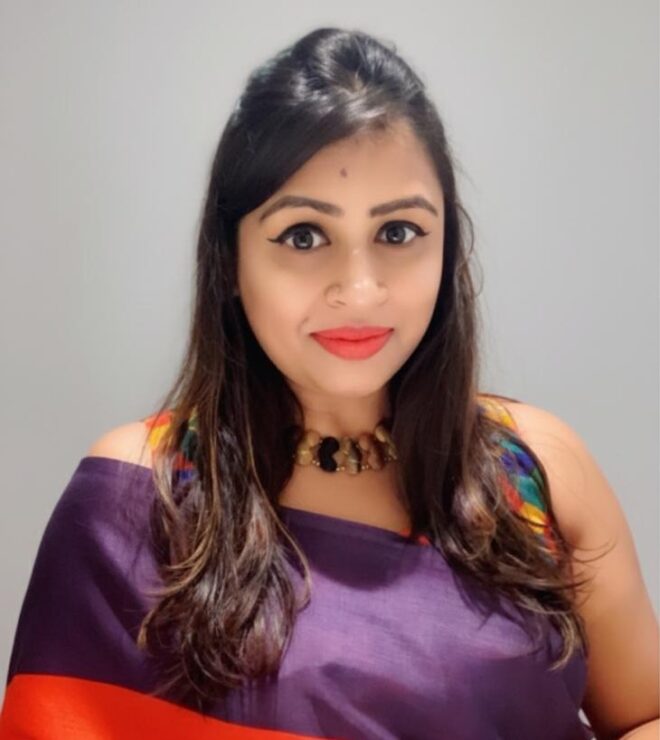
As the Academic Head of Kiya World School, Ms.Pooja Tiwari is leading the school’s academic vision with a strong focus on innovation, experiential learning, and holistic child development. With over 20 years of experience in academic leadership, she has worked as an Academic Head for schools across India and has trained educators nationwide in progressive teaching practices and student-centered learning. Ms. Pooja is passionate about creating meaningful learning experiences that nurture curiosity, confidence, creativity, and lifelong learning in every child.